Project Portfolio
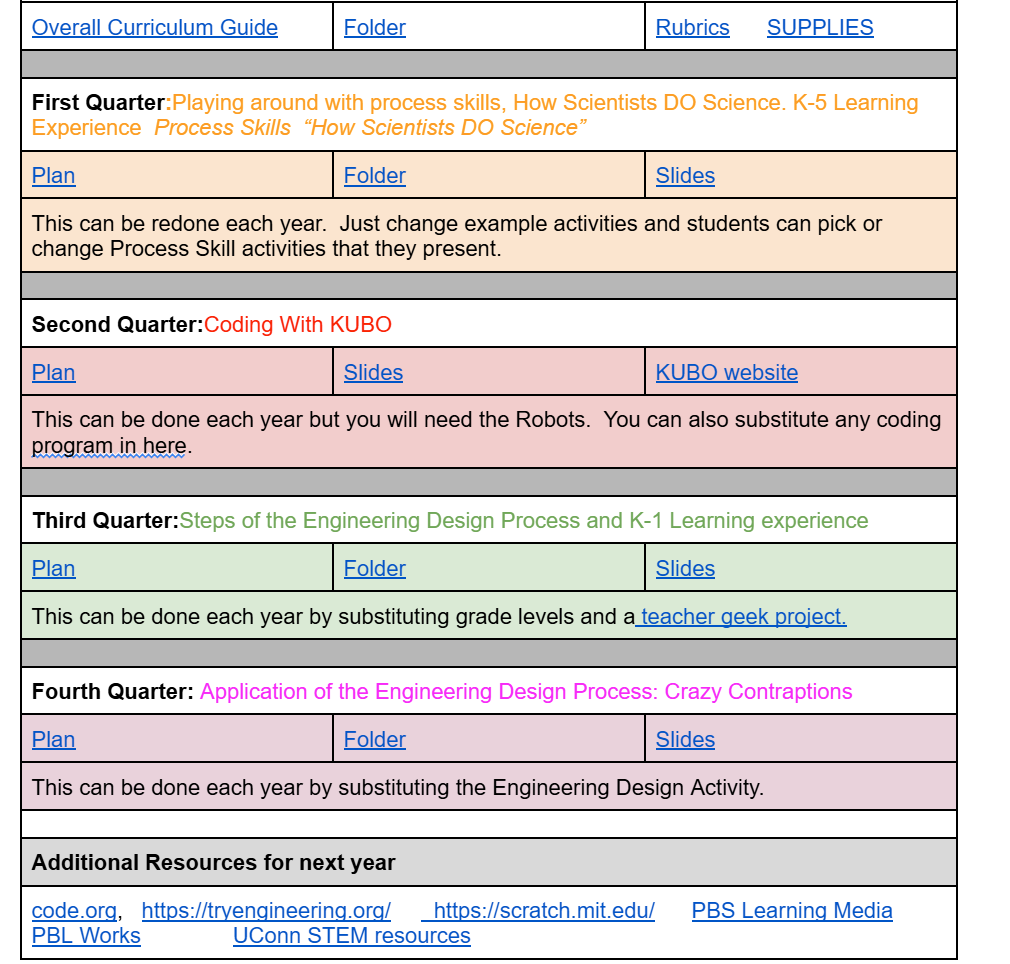
Curriculm Writing and Teacher Mentoring
- Foster creativity and curiosity, using innovative teaching strategies , to provide students with transferrable foundational knowledge and skills in science, technology, engineering, art, and mathematics, as well as crucial 21st-century skills such as critical thinking, problem-solving, and communication.
Objective: The middle school students at St. Paul school will be able to use problem solving skills in a collaborative environment to think critically, use creativity, and seek out innovation in collaborative interdisciplinary framework.
Driving Question: How can the 6-8th grade students at St. Paul School engage in STREAM to participate in the steps of problem solving and assimilate creativity, so that an investigative, systematic approach to discovery becomes applied in their real world actions?
Lee Gruss was an incredible blessing to our STREAM program at St. Paul. She not only provided a strong, thoughtfully designed curriculum, but she also partnered alongside one of our middle school teachers to co-teach and model engaging instruction. Her lessons were hands-on, creative, and truly brought learning to life for our students.
What stood out most was how she empowered our middle schoolers to confidently share their learning with others, building both competence and leadership skills. Lee didn’t just implement a program, she helped lay the foundation for a thriving STREAM initiative that will continue to impact our students for years to come. We are so grateful for her expertise, passion, and dedication.
Jenny Yankovich
Principal
Lee’s energy and enthusiasm for learning shone in the time she spent with our middle school students. She was a force of nature at times–we started with nothing and through her mentorship were able to create a program for the middle school unlike any other they’d ever been exposed to. With new ideas, new collaborations and a couple boxes full of supplies she wheeled in each Friday, the middle school students went from passive learning for themselves to actively teaching STEM concepts and skills to the lower school students. I cannot walk down the halls or bump into a parent where STREAM does not come up as one of their all time favorite classes, full of surprises and life-long learning experiences.
Sean Connelly
St. Paul Catholic School
Project Based Learning Planning and Co-Teaching
PBL: My Fantastic Elastic Brain
Driving Question: Can I, as a first grade student, understand brain basics and use this knowledge to learn strategies to help me “stretch” my brain this year?
Objectives:
- Students will develop a basic understanding of the neuroanatomy of the brain.
- Students will develop an awareness of the brain’s primary functions.
- Students will develop an understanding of the concept of neuroplasticity.
- Students will understand and apply the idea that their brain is an organ and it can grow (make more connections) when they use it!!
Essential Questions:
- How is my brain organized?
- How does my brain solve problems and make decisions?
- What can I do if I feel frustrated by my mistakes and want to give up?
- How can my brain continue to develop skills for learning?
- What steps can I take daily to follow through with the goals I have set for myself?
PBL Presentation My Fantastic Elastic Brain Adapted from Pickle Press
For three years Mrs. Gruss has graciously mentored and encouraged me to become a better teacher and person just by walking into my classroom. There isn’t a student who doesn’t smile or get excited to learn Mrs. Gruss is in the building and coming to your classroom. At such a pivotal time in first grade, she has given my students a passion, drive, and genuine curiosity to learn and ask questions. In the classroom, Mrs. Gruss is engaging and dynamic with every single student. Most importantly, every student is seen and involved when she is in class. The best part of having Mrs. Gruss in your classroom is her sincere enthusiasm and passion. Her love of learning is contagious among students and teachers.
Ms. Meghan Loosen
First Grade Teacher
PBL: Energy Drinks
The Energy Drink PBL was adapted from the Middle School Science Curriculum, STEMscopes, and was modified to meet the learning needs of the students and the time and space available.
Driving Question: How can middle school students use their knowledge of stimulus and response in their evaluation of energy drinks to make more informed decisions on their health both now and in the future? How can they share this information with others in an engaging and meaningful way?
Energy Drinks: Public Project
I have been fortunate to have Lee work with me and my students on PBL’s for 3 years. The projects Lee prepared were engaging and content rich. She focused on modifying them to meet the needs of all learners and worked positively with students to encourage their best effort. Lee was very adept at integrating ELA skills, concepts, and big ideas along with the science content. Students showed evidence of applying the skills they learned to future classwork and projects.
As an educator with 15 years experience, I have learned so much from having Lee working with my students and collaborating with me on methods that match the needs of my school community.
Ms. Mary Beth Vega
5th grade and Middle School Teacher
Community Building: affirm and anticipate the needs of others.
- For three years I have worked with Notre Dame De Sion High school during “Deep Dive Week”. High School students joined me at a grade school and took part in the Real World Engagement in the Art and Science of Teaching.
This community building project is one of my most favorite experiences to plan and facilitate. Please contact me if you would like to discuss setting up a version of this in your school community.
Driving Question: How does the hyper-focused collaboration with a high school student affect the engagement and learning of a third grade student in the Engineering and Design Process?
Community Engagement Description:
- Engage in the Art and Science of teaching while working with a third grade student on the engineering design process.
- Study “best practices” with a 40 year experienced K-8 teacher and apply problem solving and questioning skills while working one on one with a student as they interact in activities to engineer a Judo Bot.
- Understand the Art of Teaching in asking questions and productive struggle to facilitate the third grade student in building a Judo Bot prototype.
- Learning the science concepts involved in its motion, and redesigning it.
- Model and hype soft skills that will promote self confidence and growth in your student.
- Focus on the need for failure to ensure learning.
- Assist your student in a written reflection on the Engineering and Design Process.
- Take part in a school rumble, showing off your Judo-Bot.
Powered By EmbedPress
Birdwatching
I have constructed a Birdwatching unit that I have taught at three different schools. The instructional level is presented for 5th-6th grade students, but it can modified for any level. I believe that parallels exist between the experiential act of bird watching and classroom learning. I have acquired a grant through the Missouri Birding Society, State Parks of MO, and Wild birds Unlimited that allows me to purchase binoculars and field guides for each student, a class owl dissection kit, and a free bus ride to any state park in MO.
Objective: The students will develop observational skills through birdwatching, in which they will pay attention to details, recognize patterns, and identify different bird species. These skills will extend beyond bird watching and can be applied to many facets of learning for the students.
Driving Question: Can students apply the skills used in bird watching to complement classroom learning and reinforce the skills needed to think critically and problem solve reinforcing the relevance of science in understanding the natural world?
Powered By EmbedPress
Developing a Science Concept into an Experience
I am accomplished at taking any Science standard, for any grade level, and developing it into action based experiences. The integration of literacy and math are embedded into the lessons as real world learning encounters.
Explicitly Teaching Soft Skills
I really enjoy developing and facilitating activities that model and teach soft skills. Soft skills are personal attributes, traits, and interpersonal abilities that dictate how you work and interact with others. These skills are transferable from one subject area to another.
Some common soft skills are communication, teamwork, adaptability, problem-solving, critical thinking, work ethic, and emotional intelligence. The Nail It activities focus is on grit and stamina; which are mindset specific.
Working with Parents: Home Literacy Support
I worked with a school to set up a Promoting Academic Literacy at Home program.
I met with each parent in the classroom and discussed where their child was according to iready and literacy curriculum data.
Based on similarities in conversations I set up a website (see example in button to the right) to assist parents at home in using and understanding the school’s literacy curriculum.
Please contact me for a conversation on how we can do this for your school’s community.